Newsletter Subscribe
Enter your email address below and subscribe to our newsletter

 ByJohn A
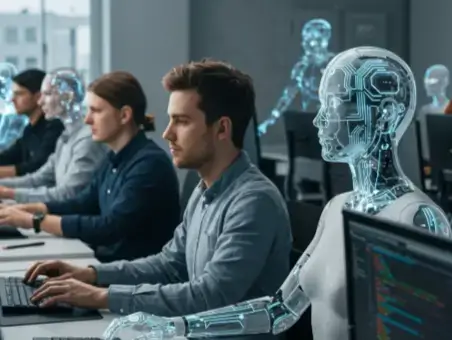
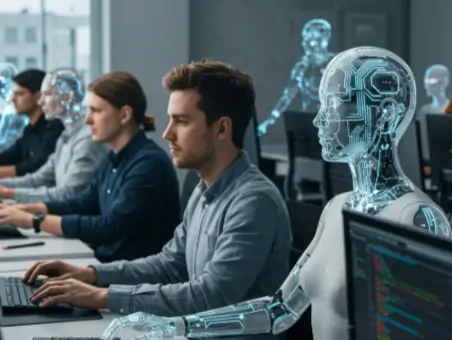
Artificial intelligence is reshaping software development with automated routine tasks, data-driven testing, and intelligent coding assistants. It guides architectural decisions, accelerates coding, and refactors code while generating boilerplate. AI-driven insights optimize deployment, security, and compliance, enabling rapid experimentation within governed boundaries. Human–AI collaboration expands creative scope while preserving accountability and traceable governance. The path forward is structured, measurable, and strategic, inviting tighter integration and continuous improvement that compels organizations to consider what comes next.
AI has become a strategic enabler in software development, reshaping how teams conceive, design, and deliver software at scale.
The landscape reveals accelerated architecture evolution, where modular patterns and autonomous interfaces guide resilient systems.
Coding assistants augment developers with guidance, refactoring, and correctness checks, enabling rapid experimentation while maintaining governance.
Teams pursue freedom through scalable orchestration, continuous learning, and principled automation, balancing creativity with discipline.
Architectures are increasingly shaped by AI-driven patterns that promote modularity, autonomy, and resilience, enabling rapid composition of scalable systems. AI-driven tooling propels architecture acceleration by suggesting optimal module boundaries, interfaces, and deployment topologies, while coding acceleration emerges through automated boilerplate, error detection, and generator-assisted patterns. Testing gains precision via continuous, data-driven feedback loops, sharpening reliability without constraining creative freedom in design or implementation.
See also: Why Crypto Wallet Addresses Look Different Across Networks
Safeguarding quality in AI-augmented software entails a principled integration of security, reliability, and compliance across the development lifecycle. Visionaries implement data governance frameworks and automated assurance to maintain trust, resilience, and traceability. Strategic threat modeling surfaces risks early, guiding safeguards and policy alignment. This governance-driven approach enables freedom to innovate while sustaining verifiable safety, interoperability, and ethical accountability throughout deployment.
Organizations aligning governance for quality can extend those principles into collaborative workflows where humans and AI systems amplify strengths without eroding accountability. In this vision, collaboration dynamics enable rapid iteration, transparent decision traces, and adaptive risk controls. Strategic implementations rely on governance frameworks that scale with autonomy, guiding teams toward responsible optimization, continuous learning, and freedom to explore innovative architectures without compromising integrity or trust.
AI reshapes developer roles by augmenting routine coding while elevating strategic tasks; career pathways emphasize systems thinking, governance, and design. AI limitations constrain automation; ROI measurement and project governance guide adoption, preserving human creativity and robust code governance.
AI limitations in complex software projects reveal a lighthouse amid fog: symbolic constraints guide decisions, yet hidden currents demand human judgment. It maps ai limitations and complex tradeoffs, offering strategic foresight while preserving freedom to navigate evolving architectures and teams.
ROI growth from AI-assisted development is measured by linking incremental value to faster delivery, reduced defects, and reusable components; ROI curves reflect sustained developer productivity gains, strategic capability expansion, and risk-adjusted performance across teams, domains, and evolving architectures.
Governance for AI-generated code requires robust compliance frameworks and proactive risk management, enabling auditable provenance, access controls, and continuous validation. The vision is scalable autonomy balanced by standards, transparency, and prudent freedom inside regulated, principled engineering ecosystems.
AI cannot fully replace human creativity in software design; it augments rather than supplants. It enhances creative autonomy and design intuition, enabling visionary, strategic technical work for an audience seeking freedom and transformative, responsible innovation.
In the coming era, AI threads through software development like a living loom, weaving patterns of speed, precision, and foresight. It translates ambiguity into testable hypotheses, converts boilerplate into agile scaffolding, and renders risk visible as tunable dials. Yet human intent remains the compass, guiding governance and clarifying ethics. Together, architects and algorithms sculpt resilient systems, where creativity, accountability, and continuous learning fuse into a scalable, transparent choreography that sustains progress across the product lifecycle.